
This is a rant, that has become a post.
I have noticed that during my lifetime that I have become somewhat allergic to any form of commercialization.
To the point that it starts hampering my daily decisions. So it is time to look into my head, find all the pieces that contribute to this behavioural pattern, and discern their value.
Last week together with my wife Tammy, I had a beautiful online Zoom conversation with Dave Gray, a fellow visual thinker. Dave is highly creative and successful in transforming his explorations in visual thinking into feasible business models. We agree on 99.9% of our views according to Dave. 🙂
He currently uses the meme ‘Create a Customer’ for his new project, the School of the Possible.
I noticed that I don’t feel comfortable with the commercial approach anymore, if I ever did. My sharing of this led to our conversation. As a ‘customer’ I am wary of sales funnels, revenue growth, special offers and other tricks that lock me into any extraction scheme.
I worked in advertising for roughly a decade and attended many lessons on business when I worked as a Graphic Facilitator for IMD, an international business school. So I have good knowledge about business models and how they are used to manipulate people. Most of it does not sit well with me. Too often these practices are a slippery slope based on false promises that ultimately lead to abuse. As we all know, this is an extractive paradigm that is designed to meet the expectations of eternal profit growth. This belief and patterns of behaviour, by their nature, ultimately and unavoidably leads to oligarchy, as explained in Wikipedia. In short: the winners will take all.
So after the meet up with Dave, I was left wondering about my hang-ups. So here I am noting all the little irritations, hoping to find the pattern, the reasons, and the root of it.
So after the meet up with Dave, I was left wondering about my hang ups. So now here I am noting all little irritations, hoping to find the pattern, the reasons and the root of it.

The dream I had the night after our conversation was insightful. It featured an old friend from my youth, who was a super competitive guy. To the point that it wasn’t fun to play with him anymore. All the joy of hanging out together and enjoying the game play was sacrificed to one thing and one thing only: Kill the competitor.
I was thinking about that this morning. I remembered the shock that a Dutch top manager experienced when he was promoted to the head office of the USA firm he worked for. On the first day at the new job he stepped into the office of his colleague, in order to introduce himself. Instead of the friendly welcome he expected, the other guy said: “I hope you suffer and die.”
This behaviour kills the joy and downgrades good work into a brutal survival game. For some people winning is everything – but everyone hates to lose. If winning becomes the main measure, corners can be cut, rules bent, checks and balances ignored, risks taken, and quality sacrificed. Because all of these things are less important than winning. So in conclusion regarding this aspect, I realize that I prefer a good game over victory at any cost. For me, it is the distinction between life as a struggle for survival and an enjoyable life worth living.
Mind you, I am not against competition in an absolute sense, but it should not be the main tactic. In games and in life winning is just one aspect. I want the best overall integral quality to be seen and appreciated, not the most aggressive terminator. That is one aspect that weighs in, in my reluctance to enter the supplier-customer frame.
Another related aspect (they all hang together I assume) is the ambiguity that is introduced when you make each other pay. How can I know if it is about the quality of the product/service? Is it just about the money? If money would be the neutral absolute measure of value and worth it claims to be, then there would be no problem. I wish it was, but it is not. Money as a measure of value, or worth, is deeply flawed.
Aside from that, this simple thought experiment will demonstrate that any exchange of value is deeply contextual by nature. How much would you be prepared to pay for a warm coat when you find yourself in a freezing snow storm? How much on a hot summer day? The context decides the value, not the amount of money. When people want money in return for their offer, they place the transaction in the supplier-consumer frame. And within that frame trust is the real currency. Without that we are open to a vast array of manipulative tactics. I do not need to delve into my past in advertising to find examples.: Of late, with the sudden rise of grocery prices, we have been introduced to a new phenomenon: shrinkflation. Instead of higher prices there is sneakily less in the package than before. So now we entered the realm of psychological warfare. Kahneman e.a. have observed that our loss aversion is many times stronger and more decisive than any option for profit. Avoiding loss is a strong and instinctive motivation. The neurological basis is now established: the fear of loss evokes stress, and awakens less ethical strategies. Just as in love and war, anything is allowed. Under pressure people (me too) tend to regress to our lowest instinctive survival strategies. These strategies are not friendly: win at all costs, or lose; eat or be eaten, kill or be killed. We have spiralled down a depressing rabbit hole, down to the final reckoning. At rock bottom, the very foundation of any encounter between two strangers, comes down to an implicit version of the question: ‘Friend or foe’? Can I trust you to be honest and true?
Ho ho now…
This does not mean that your next supermarket run you need to bring your assault gun. (Although in some countries, unfortunately, you do.) In most ‘civilized’ countries, this war is diminished to a hardly recognisable daily pattern, in which the dominant party suggests to be your best friend, while consistently milking their profit. But the underlying pattern is the same. It points to a world view where the other is not to be trusted and might take advantage of you, if the profit is worth sacrificing the relationship.
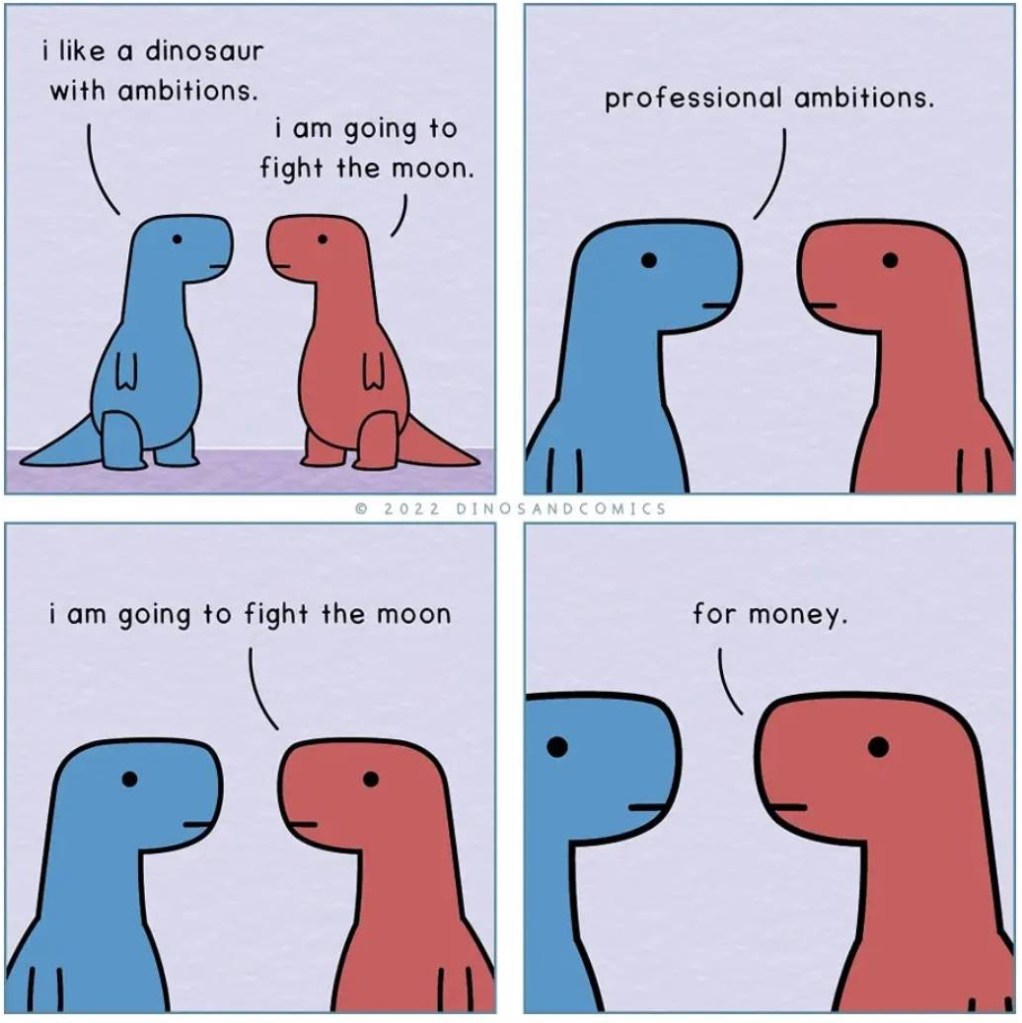
In a strictly commercial world, in the end, it is each to his own. This limited worldview is a poor one, both in a literal and figurative sense.
This is why I so dislike being reduced to being either a consumer or a supplier. It does not do justice to the wealth of reality. Please do not conclude that I am against commerce as such. Just like the wheel or plastic it is a great invention, but it should be used consciously in the proper context and with full awareness of both the advantages and disadvantages.
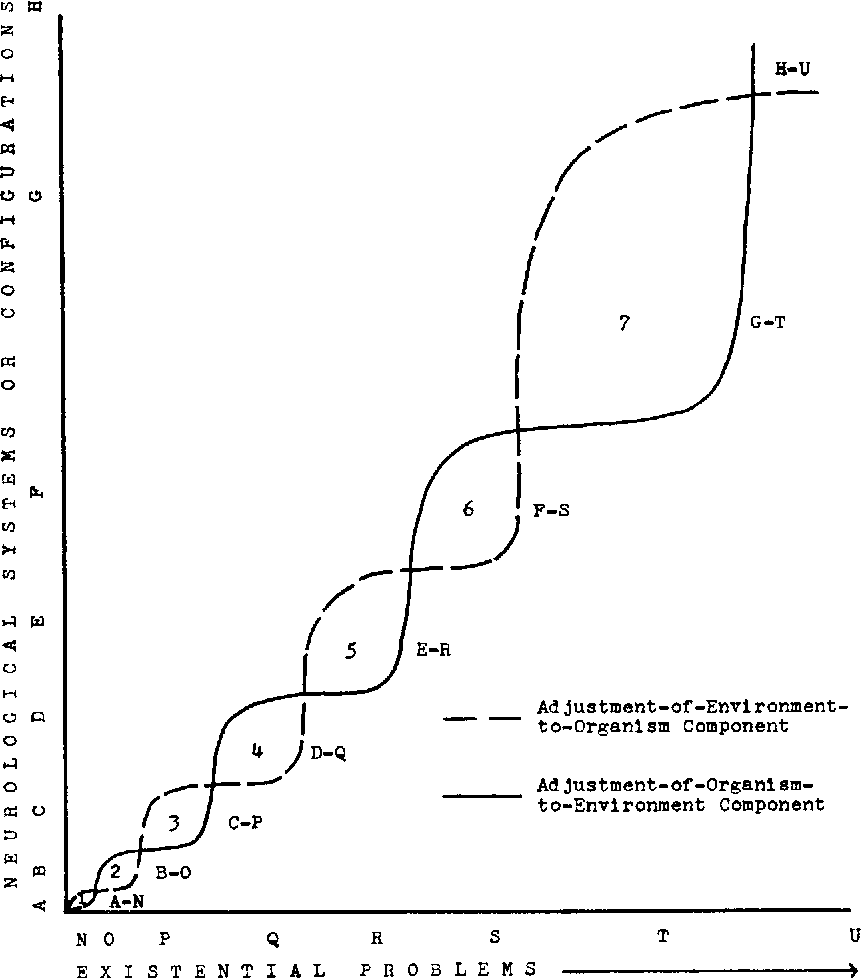
In a next piece I will place this behaviour in a wider context. I invite you to check out this amazing graph below. Trading is just one of a wide array of behaviours. Commerce is a specific strategy for specific existential challenges. System drives behaviour and context drives choice. So next time let’s think about our society as a system, starting from this visualised principle.
 making things visible
Please let me know if anyone actually reads this?
LikeLike